Before he ever cradled a 7-iron or gave a Veteran the gift of golf, Burt Jones was a kid from Milford, Ohio, staring down the narrow roads of a small town and choosing the only path that seemed to lead somewhere bigger. In December 1968, despite Cronkite chronicling the flames and firefights of Vietnam on the nightly news, he enlisted in the Air Force.
“I really didn’t have a direction I wanted to go,” said Burt. “Continuing my education was not at the top of my list.”
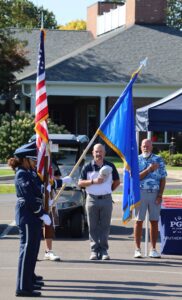
The world had to be larger than where he was. What he found was far larger than he imagined.
He moved from warehouses at Lockbourne Air Force Base to the belly of a KC-135 tanker supporting Linebacker II, the thunderous bombing campaign of the war. He lived the kind of days you don’t describe so much as carry. Days of flight orders, tonnage dropped, helping the bombers get where they needed to go to deliver their deadly cargo.
Later came the underground nuclear testing programs, radar sites strung across continents and the fighter wings. The fighters were grand: the dexterity of F-16s, the unmistakable burp of the A-10 Warthog, the shadowy silent F-117, whose secrets he shepherded as a Weapons System Manager until his retirement in 1994.
Civilian life brought the typical burdens Veterans face but Burt found structure with the VA Hospital in Cincinnati. Managing the computer systems and maintenance personnel for the VA isn’t quite the same as a stealth fighter–rewarding for sure, but IT doesn’t have the same team bonding qualities you get when responsible for a multi-million dollar war machine.
“I retired from the VA and I was bored,” says Jones. “I had been around Veterans and active-duty my entire adult life.”
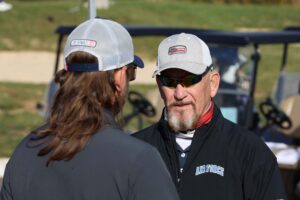
Then came golf. Or rather, PGA HOPE. First as a participant in Cincinnati from 2017 to 2019, then, after a nudge from local PGA Professional Matt Starr, as a Southern Ohio PGA HOPE Ambassador. Soon, Burt was a ubiquitous presence at HOPE programs, beneath sun or drizzle, no matter what. No excuses. Present and accounted for, helping heroes find what had gone missing: the military family, reborn in laughter, branch banter, encouragement.
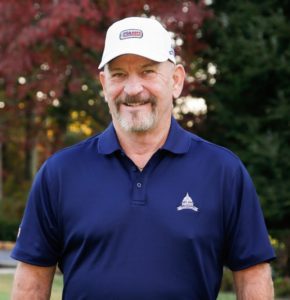
He has watched men and women with disabilities discover balance again. He has watched strangers become a unit. He has even trained beyond the program to help adaptive golfers with no military ties at all. Joy, he’s learned, has no rank.
“You will never know what golf can do for your mental well being, how it can bring you close to people with similar experiences until you try PGA HOPE,” says Jones. “Seeing the faces of people enjoying themselves is all I need to keep going.”
And coming from a man who has lived whole lifetimes inside service, that sounds a lot like an order worth following.